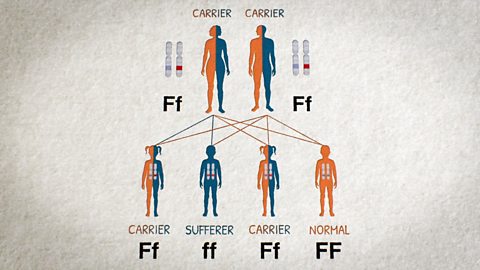
What are the two types of variation?
Continuous variation
This is a gradual change in a characteristic across a population, it could be human height, mass or shoe size.
Continuous variation is represented as a histogram (no gaps between bars).
A histogram should show normal distribution, with most individuals around the average value and a few at the extremes.
Discontinuous variation
A characteristic of any species with only a limited number of possible values shows discontinuous variation. For example:
gender - male or female
blood group - A, B, AB or O
tongue rolling – can or can’t roll your tongue
hand dominance – left, right or both
There are no values in between (intermediate values), so this shows discontinuous variation.
Discontinuous variation is represented as a bar chart.
What are some of the causes of variation?
Genetic variation:
Caused by changes to Genetic structures that usually occur in functional pairs in the nucleus of cells (except in gametes and bacteria). or The basic unit of genetic material inherited from our parents. A gene is a section of DNA which controls part of a cell's chemistry - particularly protein production. (DNA).
A random and spontaneous change in the structure of a gene, chromosome or number of chromosomes. are random changes in:
- number of Genetic structures that usually occur in functional pairs in the nucleus of cells (except in gametes and bacteria). (eg Down's syndrome)
- gene structure (eg cystic fibrosis)
Sexual reproduction:
- independent assortment during meiosis creates genetically different Sex cell (sperm in males and ova/eggs in females)..
- random fusion of gametes leads to different phenotypes in a population.
Environmental basis:
- an individual’s environment can also cause variation.
- for example, human height is genetically determined but affected by diet and health.
Natural selection
Living organisms are adapted to their environments in order to survive.
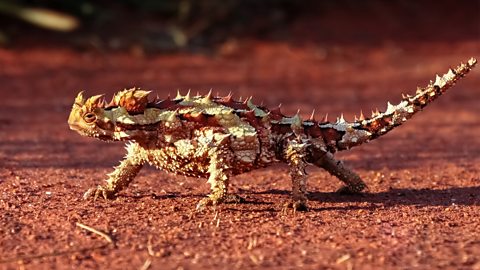
Image caption, Thorny devil
The thorny devil is a lizard native to the Australian Outback. In between its scales are microscopic channels that catch and carry water. By opening and closing their mouth, they drink through their scales like sipping through a series of straws.
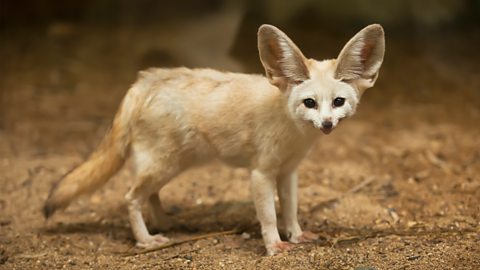
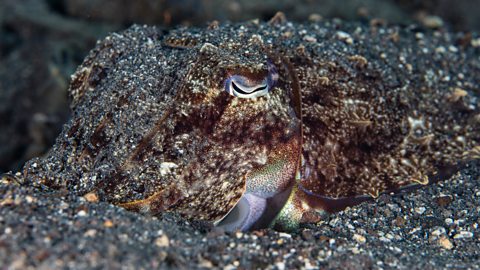
1 of 4
Competition makes these adaptations for survival very important. Only the best adapted will survive.
The theory of natural selection
There is variation among the The visible characteristics of an organism which occur as a result of its genes. of individuals in a population.
Organisms compete for resources (for food, mates, habitat etc).
The best-adapted individuals survive, and the less well-adapted individuals do not survive – this is differential survival.
The surviving organism with advantageous phenotypes reproduce.
They pass on their beneficial genes to the next generation.
Natural selection: antibiotic resistance
There is variation within bacterial The visible characteristics of an organism which occur as a result of its genes.. Some are resistant to Substances that control the spread of bacteria in the body by killing them or stopping them reproducing. and some are not.
Treating bacteria with antibiotics provides competition.
The resistant individuals survive and the non-resistant individuals do not survive – this is differential survival.
The resistant bacteria are able to reproduce.
The resistant bacteria pass on the resistance gene to the next generation.
Number of resistant bacteria increase and non-resistant bacteria decrease.
The gene for antibiotic resistance is usually caused by a beneficial A random and spontaneous change in the structure of a gene, chromosome or number of chromosomes. in the bacterial cells.
Evolution
Charles Darwin used the theory of natural selection to explain the process of evolution.
Evolution is a continuing process of natural selection that leads to the gradual change of an organism over time.
It may result in the formation of a new A type of organism that is the basic unit of classification. Individuals of different species are not able to interbreed successfully..
Extinction
A type of organism that is the basic unit of classification. Individuals of different species are not able to interbreed successfully. are extinct if there are no living individuals left.
Extinction happens if a species fails to adapt to changes in its environment.
Fossils have provided us with information on some extinct species.
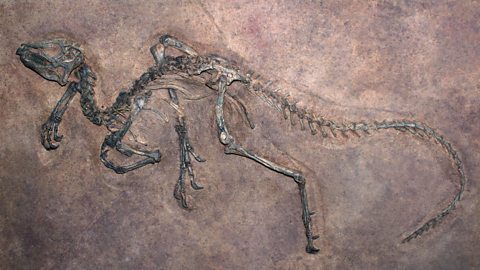
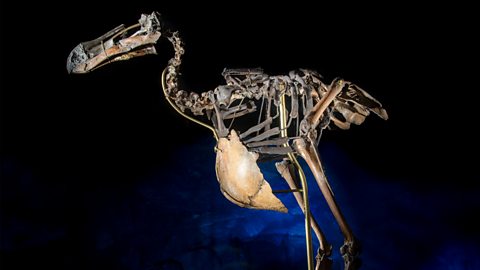
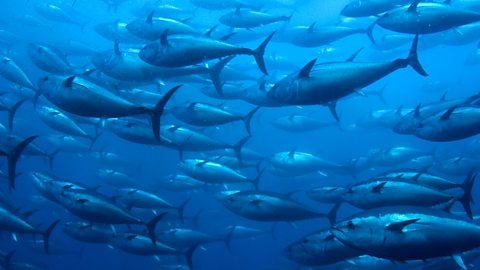
Species that are at risk of becoming extinct are known as endangered.
A species can become extinct for many reasons, including:
hunted by humans
disease
loss of habitat (eg deforestation)
Extinction can be avoided by:
laws preventing the hunting of endangered species
special programmes such as creating nature reserves to protect habitats
education that encourages people to do their part in protecting the environment
Selective breeding
Selective breeding or artificial selection is where humans select individual plants or animals with desirable characteristics such as:
Appearance: aesthetic qualities such as size or colour.
Increased food quantity or quality: higher crop yields or better milk/meat quality.
Disease resistance: improved resilience to common pests or illnesses.
These selected individuals are bred together to produce offspring with those characteristics.
Repeated selection and breeding over many generations results in all offspring containing the desirable characteristic.
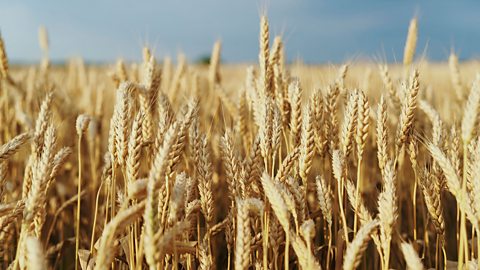
Wheat has been bred over many years to produce the following desirable characteristics:
- a shorter stalk length less likely to suffer wind damage
- a uniform size that’s easier to harvest
- a larger yield
Test your knowledge
Watch a video
Do you notice anything unusual about this salamander?
If you need a clue – in this cave there is usually no light.
This is a Texas blind salamander, a type of salamander that has no eyes.
In the perpetual darkness of the caves where it lives, they are of no use – instead its other senses have become highly developed.
It can detect any movement in the water, it is completely aware of its surroundings, but all without eyes.
By losing its eyes and developing other senses, the Texas blind salamander has adapted to its environment.
All over the planet, plants and animals adapt to the challenges of their own habitat.
These distant fox cousins range from the frozen north of the Arctic, to the heat of the African desert, and everywhere in between, including your own street or back garden.
Yes – I'm talking about you.
In the distant past these foxes would all have shared a common ancestor, but now they are all adapted to their local habitat.
Can you spot how these animals differ from each other, and why they have developed these differences?
The Arctic fox has darker fur in the summer months, but when winter comes it has developed this pure white coat to help it blend into the snow while scavenging and hunting. The fur is also thick and warm to cope with the extreme cold.
What a pair of ears. I should probably talk quietly.
But in fact, although foxes do have very good hearing, that is not the only reason why these desert foxes have such huge ears.It’s also to keep cool.
The desert fox’s amazing ears help keep it cool by helping it to lose heat more quickly.
Also notice how the coat is much thinner than that of its Arctic cousin. In the scorching desert, this fox has adapted to stay as cool as possible. This is why the desert fox is also most active at night.
Nights in the desert can be very cool, and it's a time when many small desert animals are active – a perfect time for hunting.
Nothing happening here.
But in nature things are not always what they seem.
Many animals have adapted to use camouflage to hide and blend into their surroundings.
Camouflage can be used as a form of defence, to help hide from predators.
But it can also be used to help catch prey.
Probably the undisputed master of camouflage in the whole animal kingdom is the amazing cuttlefish.
The cuttlefish can change both the colour and texture of its skin to match any environment, and these incredible transformations can all happen in the blink of an eye.
There are amazing examples of camouflage everywhere in nature, but how did these incredible creatures develop this impressive talent?
Offspring are not identical to their parents. Even if it is a very small difference, there is variation from one generation to the next.The better the camouflage of the offspring, the harder it is for them to be seen by predators or prey, and the more likely it is that they will survive and reproduce.
Here is a simple example.
These moths are from the same parents. Some are dark, some are light.
In the local environment, the darker moths will be more easily seen by predators and will be less likely to survive. The lighter moths are more likely to reach adulthood and reproduce.When they do, they will be more likely to produce more lighter-coloured offspring. So after several generations, the number of lighter moths will be higher than the darker moths.
This is how a species can adapt and develop over time to match their environment.
This is also true for animals that use camouflage to hunt.
The better they are at hiding, the more successful they will be at catching food and surviving, and the more offspring they will produce.
So through variation, we can see how over time a species can evolve and adapt to their environment.
Animals that are better adapted to their environment will be more successful in surviving and reproducing.
This is a key part of what we call natural selection.
And natural selection is a key part of evolution, which is what we call it when species change and develop over time.
More on Genetics
Find out more by working through a topic
- count1 of 6
- count2 of 6
- count3 of 6
- count4 of 6