'South Asian programmes helped us settle into our new lives'

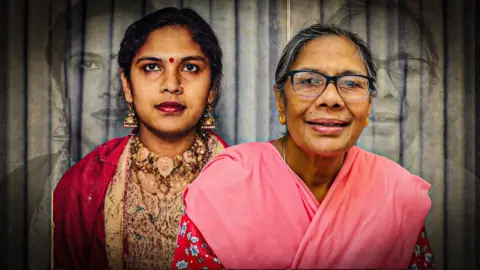 Anil Kumar Bharath / Nirmala Rani
For the first generation of South Asian migrants to the UK, dedicated radio and television broadcasts by the BBC were a lifeline.
As well as lighter content such as music, the early output included practical advice to help new arrivals settle into their lives in areas such as West Yorkshire, where many South Asian families were attracted by jobs in the textile industry.
Sixty years on, three generations have shared their memories of South Asian programming and spoken about how it shaped them.
 Krishna Devi / BBC
When Nirmala Rani arrived in the Leeds suburb of Hyde Park in 1979, life felt quiet and unfamiliar. She was a Punjabi speaker from India and knew few people in England.
Aged 17, Nirmala had come to Leeds to join her husband, whose family had already settled there. Like many South Asian families then, she followed relatives who had moved first to build a new life.
"When a letter came from home, we'd read it 10 times."
With no telephone and no relatives nearby, each letter was a lifeline.
She was adjusting to a new country, new culture, and a loneliness that came from being far from the sounds and language she understood.
The BBC had already begun making programmes for South Asian audiences. One of the first, 'Apna Hi Ghar Samajhiye' (Make Yourself at Home), offered language lessons, music and advice.
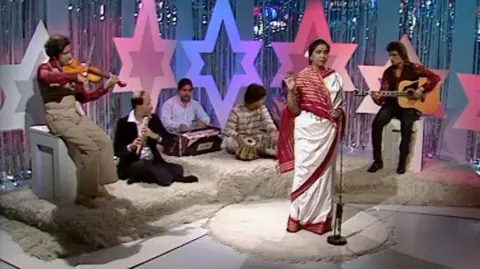
By the late 1960s, a magazine programme for South Asian viewers, 'Nai Zindagi Naya Jeevan', had become a weekend fixture.
"We'd wait the whole week to hear one Hindi song," Nirmala says. "Music was food for our souls."
Sunday mornings became something to look forward to. Families gathered around the television with homemade food.
"We'd make chole puri or aloo tikki. It felt nice, everybody sat enjoying together.
"It got rid of the loneliness."
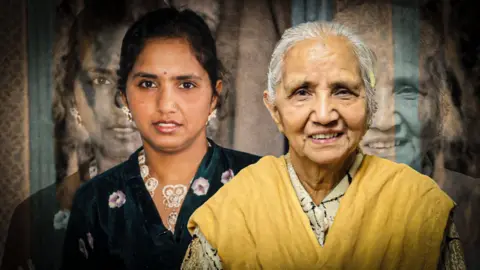 Amrik Chand / Anil Kumar Bharath
Those same programmes meant just as much to Krishna Devi, who arrived in 1967 and lived in Harehills, another inner-city neighbourhood in Leeds.
Krishna was also just 17 when she came from India, joining her husband and his family.
"It wasn't easy," Krishna says. "We didn't understand English and they didn't understand Punjabi."
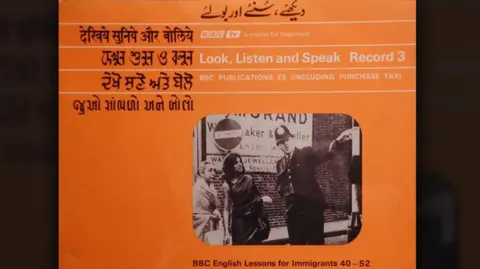
One programme helped new arrivals learn the basics: 'Look, Listen and Speak', a BBC English learning series widely used at that time.
"They used to teach us word by word. They taught us how to cross the road. Look left, right."
Even simple tasks could feel unfamiliar.
"When I went to the shops, I didn't know how much things cost. I'd put the money out on my hand and let the shopkeeper take however much it was."
Like Nirmala, the programme she looked forward to most was Nai Zindagi Naya Jeevan.
"There was one Hindi song in that half hour. We waited for it."
Asked why those songs mattered so much, her answer is simple.
"Because it was our language. That half hour made us forget everything else."
Her Sundays followed a familiar pattern: chai, parathas and three generations gathered around a television.
 Anita Bhalla
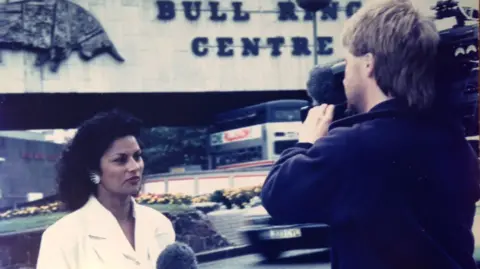
Experiences like Krishna's were shared in living rooms across the country, but inside the BBC, broadcaster and Asian Network pioneer Anita Bhalla was pushing for something more than comfort.
She wanted representation, and a voice.
"When I started, we didn't exist," she says. "There was nobody like me, except in the specialist programmes."
Those early shows mattered because they were the only place migrant families could see or hear anything familiar.
"There was nothing else where people could connect with home, with language, culture, anything."
She later helped shape the early Asian Network in the late 1980s.
"We were no longer new arrivals. We were integrated communities. So, what was our voice? That's what we were trying to find."
She pushed for South Asians not just on screen, but behind it.
"Where were the people behind the scenes? That's where the real power was."
Reflecting on young South Asians entering the industry today, she says: "I hope their ambitions aren't capped. They should be everywhere."
 Yasmin Shabir
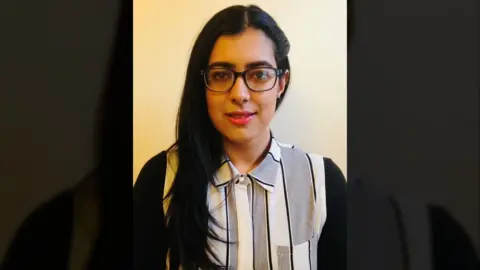
For Yasmin Shabir, who grew up in the Leeds suburb of Armley in the 1990s, programmes like 'Network East' and 'Goodness Gracious Me' helped a new generation of British Asians see themselves on screen.
Raised in a Pakistani household, she remembers these programmes as a weekly link to the culture her parents had grown up with.
"Those programmes were our only way of actually finding out what was going on in Bollywood and the entertainment world.
"Seeing Salman Khan on the BBC was surreal. We were like, 'Wow, how did they get him?' "
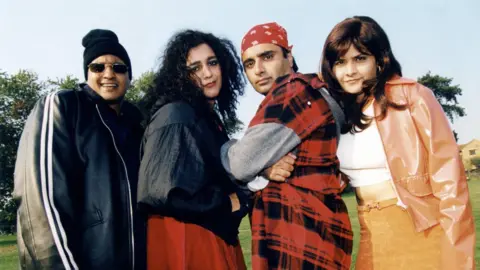
But it was 'Goodness Gracious Me' that resonated most.
"The competitive aunties comparing their children, 'my son's doing this...well, my son's doing that'
"We could relate to the characters. It felt like real life.
"They'd say a word in Hindi and I'd think, 'I know that word.'
"It felt like it was made for us. They brought a bit of flavour to life."
By the early 2000s, British Asian culture was breaking into the mainstream.
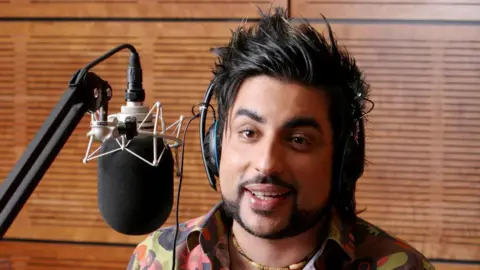
In the middle of that shift was Bobby Friction, who now presents on BBC Asian Network.
"The revolutions of the 1990s paved the way for the riches of the early noughties," he remembers.
" 'Goodness Gracious Me', for us, was monumental - that specific British Desi humour was on national TV."
Seeing members of the cast who were from the same parts of London as he was felt, he says, "like the revolution wasn't just in my head, it was happening across the country".
"In 2002, Radio 1 decided to do a South Asian music show, and Nihal Arthanayake and I were chosen to present it.
"My ambition since the age of 15 was to be on Radio 1 playing South Asian music."
That same year, Asian Network went national, and Desi DNA launched soon after.
"Suddenly you're in this new era which has already started when the other era hasn't even finished yet.
"At that time, if you were young and South Asian just coming of age, it was very, very different compared to even 10 years before."
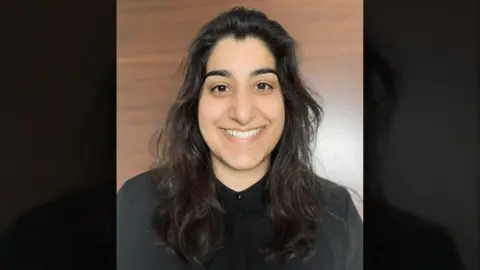 Tasmiyah Manan
For millennials like Tasmiyah Manan from Oakwood in north Leeds, South Asian broadcasting didn't just entertain; it shaped how she understood herself.
She remembers watching Network East Late, Desi DNA and tuning into Asian Network as teenager, long before streaming and TikTok reshaped how music travelled.
"It was the main station playing the music I grew up listening to. I connected to it, the songs, the language, the artists."
Seeing presenter Noreen Khan on air inspired her.
"She's been a staple in my life. Seeing her in the media inspired me to want to go into the media."
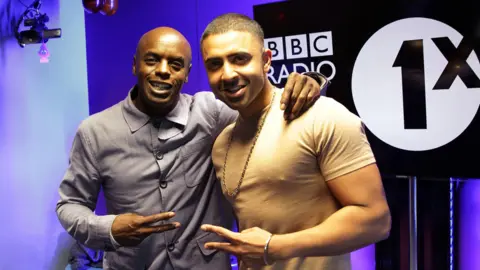
She loved the fusion artists like Jay Sean blending R&B, Punjabi, Hindi and English into something that felt exactly like her life.
"I was born in England, I'm British Pakistani, I live my life with fusion. Those artists sounded like us."
Comedy mattered too. Shows like 'The Kumars at No. 42' reflected her world.
"The paratha smoke filling the kitchen, the brutally honest elders, that was us.
"When I see someone like Anita Rani in the media, it makes me feel seen.
"It means we've finally made it to the mainstream."
"If they can do it, I can. It's representation. It's connection. It's my identity."
When Arzu Dutta was growing up in Castleford in the 2000s, representation still felt limited.
Now a BBC Look North reporter and presenter on Radio Leeds, she can see how far things have changed.
She watched Indian entertainment channels at home, but it was the BBC that quietly shaped her British identity, especially the moments she shared with her dad before school.
"My dad would make chai, and we'd sit and watch the news, and watch Naga Munchetty presenting.
"It forms your subconscious of who you are and how you view yourself and the heights you can reach."
Today, she says British Asian identity feels more defined.
"We are at a place where the hyphen between British and Asian is really important.
"As long as South Asian people exist, South Asian broadcasting will matter because you can relate to it.
"I don't walk around thinking, 'I'm Indian.' I just am."
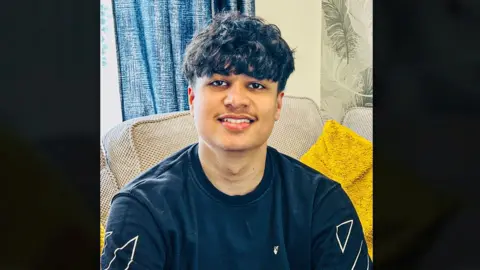 Anil Kumar Bharath
A few miles north in Horsforth, west Leeds, Nirmala's grandson, 16-year-old Krish Nangla, sees South Asian broadcasting through a completely different lens.
One of the programmes he connects with most is 'Man Like Mobeen'.
"Guz Khan's character, he's like an apna. He resembles our culture, how he talks and what things he says."
He follows Asian Network on TikTok, watching interview clips and mixes.
"I like AJD's show. He knows what's coming in the Bhangra industry and what's popular.
"It makes me feel more in tune with Indian culture. I know what's currently going on and what the hype's all about.
"I wouldn't be who I am now if it wasn't for those things."
He would like to see more young South Asians shaping the future of broadcasting.
"It'd be nice to see more people of my own age on there just putting mixes out and doing stuff with the BBC."
"I could relate to them, we're the same age, going through the same things."
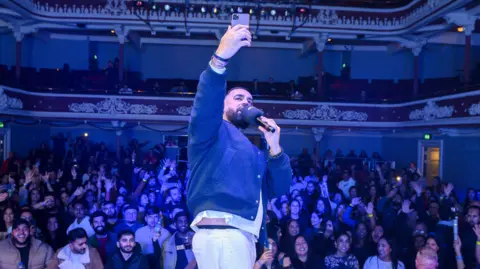
Sixty years after Nirmala waited a week to hear one Hindi song, her grandson Krish scrolls through Punjabi music on his phone in seconds.
The platforms have changed, but the purpose hasn't: connection, identity, and the feeling of being seen.
Listen to highlights from West Yorkshire on BBC Sounds, catch up with the latest episode of Look North.