South Asian donor shortage leaves long organ waits

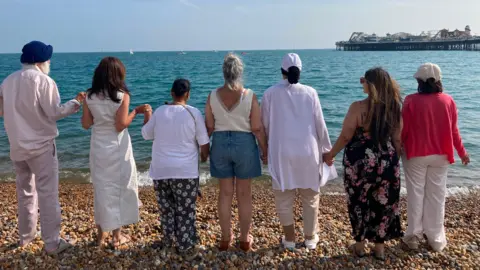 Family handout/NHS Blood and Transplant
More than 20 times as many patients of South Asian heritage are waiting for an organ transplant as there were the number of deceased donors from the same background last year, NHS figures show.
NHS Blood and Transplant recorded 26 deceased donors of South Asian heritage between April 2025 and March 2026. There are 554 patients of the same heritage on the waiting list.
Organs are matched by blood and tissue type, so the closest match often comes from a donor of similar ancestry.
An NHS appeal, timed to coincide with South Asian Heritage Month from 18 July to 17 August, is calling for people to discuss organ donation and to confirm their decision on the NHS Organ Donor Register.
According to the figures, a record number of people - more than 8,500 - are currently on the UK transplant waiting list.
They also showed that adults of Asian heritage wait an average of 648 days for a kidney, against a UK average of 547.
For children of Asian heritage, the average wait is said to be 709 days, compared with 450 across the UK.
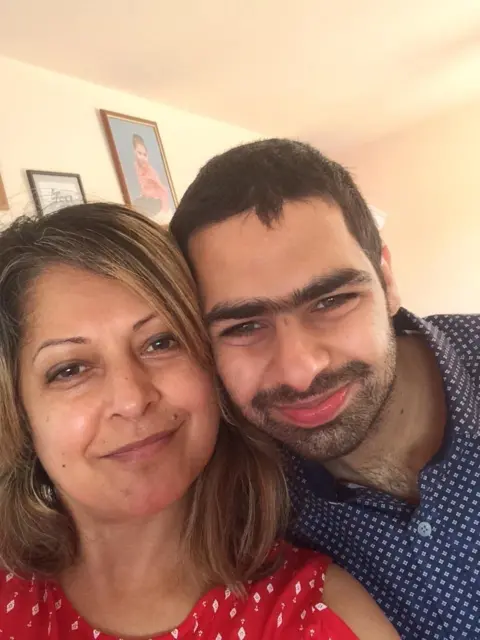
Bevi Sandhu, 55, from Hounslow, west London, agreed to donate her son's organs after he died earlier this year.
Sunni Bansal, 34, who died suddenly in February, was non-verbal and had autism and a learning disability. His kidneys went to two men and his heart to a man age 30.
"Organ donation is something I think he would have wanted because he was so caring about other people," his mother said.
"I didn't want this to be the end. I thought the only way he can carry on living is maybe living through other people, and that would be by organ donation.
"I spoke to my family and I spoke to Sunni's dad, and everyone agreed that it was a good idea. We're Sikh, and in our community people hardly ever talk about organ donation."
 Family handout/NHS Blood and Transplant
Sunni had a Sikh funeral, with two white horses with orange feathers in their manes drawing the carriage. Bevi explained how the funeral got many people in her community talking about organ donation.
She said: "That morning we were all getting ready to go to my son's funeral and the letter came through the door. I could not open that letter and I gave it to one of my friends who had been very close to Sunni as well, and she read out the letter at the crematorium.
"The letter told us that Sunni's donation saved three people. His kidneys saved two men, and his heart saved a 30-year-old man, while his liver and both of his lungs were donated to research.
"My friend was the only one that knew what it said, and when she read it out I just cried my eyes out. I just thought that was so meaningful."
Having the letter read out during the funeral got friends and family talking about organ donation for the first time, she said.
The sisters have since even found out about a cousin who passed away after needing a transplant. "It was only afterwards I had the conversation with my auntie, because of Sunni," Bevi said.
"It just shows how one conversation can spark another."
Last year 67% of Asian heritage families agreed to donation where the person had already joined the NHS Organ Donor Register, against 85% among all other ethnic groups.
 Family handout/NHS Blood and Transplant
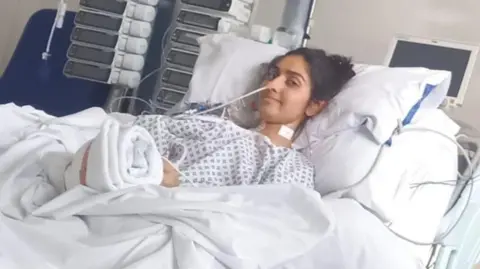
Mehreen Ahmed, 25, who had a heart transplant three years ago, said she had never heard of organ donation before she was listed.
"I come from a Pakistani background and I'd like more people within our communities to just start that conversation," she said.
Figures also showed that eople of South Asian heritage are more likely to develop diabetes and high blood pressure, both of which can damage the kidneys. In March 2026 they made up 90.1% of listed patients needing a kidney, compared with 86.4% of the list overall.
Harpreet Matharu, regional head of nursing at NHS Blood and Transplant, said the shortage of close genetic matches meant long waits were likely.
"We already see longer waiting times among Asian heritage populations and, unfortunately, some people waiting for a transplant will never receive one," she said.
"It's really important that you confirm your decision on the NHS Organ Donor Register so your family can be sure of your decision after your death."
Listen to the best of BBC Radio London on Sounds and follow BBC London on Facebook, X and Instagram. Send your story ideas to hello.bbclondon@bbc.co.uk