Blacksmiths head to Denmark to forge Viking anchor

 National School of Blacksmithing
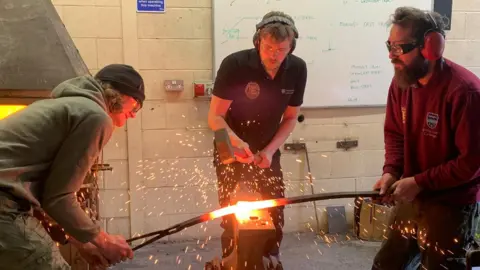
A group of blacksmiths is travelling to Denmark to take part in an experimental archaeology project, crafting a Viking anchor using traditional materials and techniques.
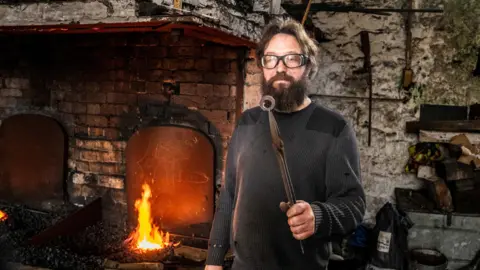
Teesside blacksmiths Rowan Pickford and Kyle Priestman will join their former teacher Rowan Taylor and fellow former student, Ernestas Jakubauskas, travelling to Aggersborg.
The project will see the smiths use bloomery iron, the same material used by Viking smiths centuries ago.
Taylor said the project was a "rare opportunity to bring together traditional craftsmanship and experimental archaeology" to deepen the understanding of Viking Age technology.
Internationally recognised bloomery expert Jens Olesen is leading the project, and Taylor said he "nearly bit Jens' hand off" when he asked him to design the anchor.
Taylor taught both Pickford and Priestman at the National School of Blacksmithing in Hereford.
Pickford, from Darlington, said it was an "absolute pleasure" to be involved in the project and learn new techniques.
"Forging an anchor in Denmark is a fantastic opportunity to meet craftsmen who work in an entirely different market, not only for networking but to take away new experience to broaden my work at home," he said.
"Working so traditionally becomes more and more scarce, so being able to do so only adds to the excitement of taking part."
 Jill Jennings
The completed 8th Century authentic anchor is expected to weigh about 10 kg (22lbs) once completed and be 70cm tall (27ins).
Priestman, from Stockton-on-Tees, said he had never worked with bloomery iron before and thought it would be a good challenge to learn how to work it.
"It's exciting to not only be part of the project, but also exciting to have the anchor being used practically at the end," he said.
"It's not often I get the opportunity to collaborate with such talented smiths so I jumped on the opportunity when I was asked to join the project."
Once finished, the anchor will be fitted to the Huld, a reconstructed Viking vessel operating from Aggersborg.