Students urged to get meningitis jab by autumn

 Getty Images
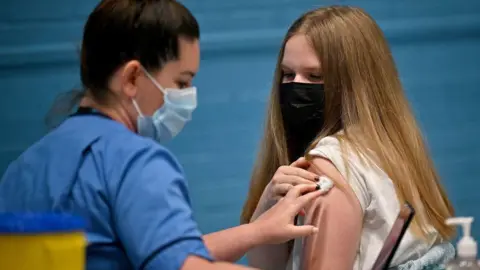
A council's health chief has urged young people to get vaccinated against meningitis B (MenB) before heading to university or college.
City of Wolverhampton Council's Obaida Ahmed said students should take advantage of the free MenB jab, describing it as one of the best ways to protect themselves against the disease.
It is available for people born between 1 September 2007 and 31 August 2008, as well as anyone born on or after 21 July 2001 starting at university or a residential college for the first time this autumn.
The jabs are being offered as part of a one-off programme after two students died from the disease due to an outbreak in Kent earlier this year.
Ahmed, the council's cabinet member for health, wellbeing and community, said: "Starting university is an exciting milestone, but it is also important to protect your health before you go.
"Meningitis can be a very serious illness that can change lives in a matter of hours and we have seen a number of outbreaks this year which have, tragically, led to two fatalities."
 City of Wolverhampton Council
The NHS said two doses of the vaccine, taken at least 28 days apart, were needed to ensure people were fully protected.
"Getting both doses of the MenB vaccine before starting university is one of the best ways young people can protect themselves," Ahmed added.
"So I would encourage everyone who is eligible to book their vaccination as soon as possible."
Ahmed's plea came after a similar one was made by Deniz Mills, from Kidderminster, whose son Aaron died after he fell ill during the Christmas break from his studies in Liverpool.
"We had no chance with Aaron, within hours we'd lost him," Mills said previously.
"There was nothing anybody could do for him. So, if you've got the chance to have the vaccine, take it."
Those eligible for the vaccine can organise an appointment through the NHS's national booking service online or by contacting a participating pharmacy directly.
What is meningitis?
According to the NHS, meningitis is an infection of the protective layers that cover the brain and spinal cord, and can be life-threatening if not treated quickly.
It can be caused by viruses or bacteria, usually spread through close contact with a carrier of them.
The contact includes kissing, sharing drinks or vapes, and being close to them for a long period of time, such as living in the same home.
Anyone can get meningitis but it is more common in young children, teenagers, younger adults, older people and people with a weakened immune system.
Symptoms can develop suddenly, and include:
- High temperature
- Very cold hands and feet
- Stiff neck
- Joint and muscle pain
- Severe headache
- Eye pain when looking at bright lights
- Seizures
- Vomiting
- Confusion
- Being very sleepy or difficult to wake
- Spots or a rash
Babies and young children might not want to feed, have a high-pitched or unusual cry, have a stiff or floppy body, or have a bulging soft spot on top of their head.
Follow BBC Wolverhampton & Black Country on BBC Sounds, Facebook, X and Instagram.