How anti-gay law derailed artist's windmill quest

 Mills Archive Trust
A new exhibition tells the story of an artist whose quest to paint every windmill in the UK was cut short after he was convicted under a law that criminalised sex between men.
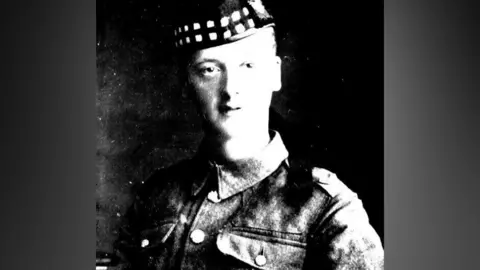
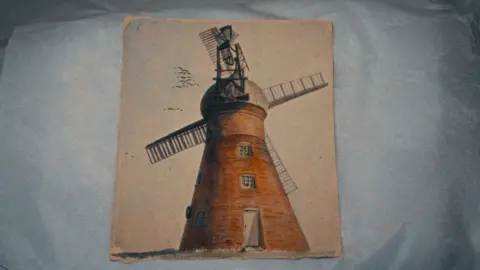
Karl Salsbury Wood saw windmills as an example of Britain's disappearing rural industry and wanted to document them all.
The war veteran painted 1,394 of them before his arrest in Lincolnshire in 1951 for "gross indecency".
Emily Andersen, a filmmaker who has made a short film for the exhibition at The Hub, in Sleaford, said Wood's work had "been buried in a way" because of his arrest and it was "vital" to share his story now.
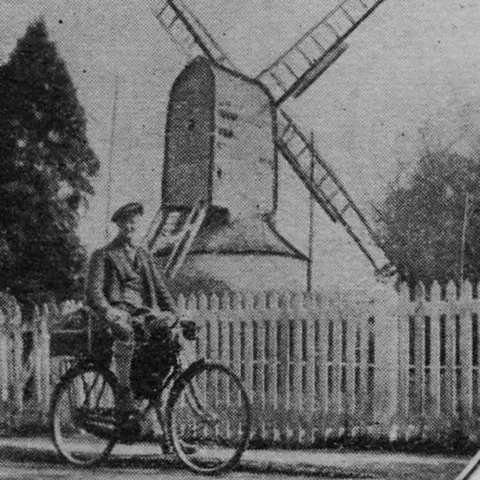
She described him as "an eccentric" who would "go around on a bicycle with his paints on the back of his bike".
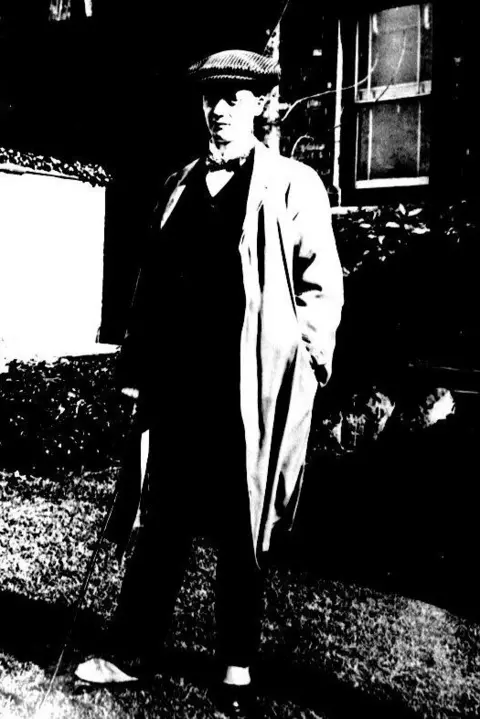
"He'd wear breeches and colourful shirts and dickie bows. He was somebody everyone knew."
 Mills Archive Trust/ C.Burt
Wood was born in 1888 in Derbyshire. He served his country during World War 1 before settling in Gainsborough.
He developed a fascination with windmills, which he described to a local newspaper as "fast-passing relics of the past", and spent years cataloguing hundreds of the buildings between 1920 and 1951.
Andersen said Wood wanted to make a book of his work.
"He was very, very fastidious about how he was making these trips and what he was doing it for," she added.
In 1932, Wood told the Gainsborough and Isle of Axholme News that he went about his quest on a bicycle because he had learnt "that unless one works for a thing, it is scarcely worth the having".
He said the public had an "extraordinary interest" in windmills and he thought their use led to the development of the "modern science of engineering".
 Mills Archive Trust
Following his arrest, Wood was sentenced to four years in jail. His book, to be called Twilight of the Windmills, was never finished.
The crime of gross indecency was also used to convict the war hero Alan Turing and the writer Oscar Wilde.
In 2017, under Turing's Law, the government officially pardoned thousands of men for their convictions for consensual same-sex relationships.
In 2023, Lincolnshire Police issued a public apology over the "unacceptable way in which homophobic laws were enforced" in the past.
 Emily Andersen
Andersen said: "It's just the reality of what happened if you were homosexual.
"I think we forget in 2026 in the West that it's possible to be gay, homosexual, LGBTQ and so on. I think it reminds people of times when it was harder."
The story of Karl Salsbury Wood forms part of an exhibition, called Common Ground: Sleaford's Shared Stories, which runs until 8 November at The Hub in Sleaford.
Clarification, 27 July 2026: An earlier version of this article stated that Emily Andersen was a researcher for the exhibition. She is actually a filmmaker who has produced a short film for the exhibition. We are happy to clarify this.
Listen to highlights from Lincolnshire on BBC Sounds, watch the latest episode of Look North.
Download the BBC News app from the App Store for iPhone and iPad or Google Play for Android devices