Solar panel fires raise safety concerns

 Ian/Yorkshire Visions Media
Solar panels have been blamed for a number of high-profile fires.
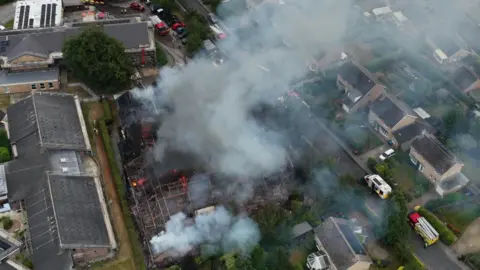
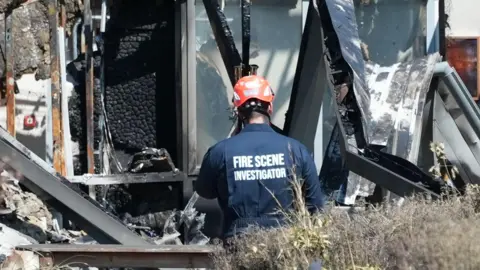
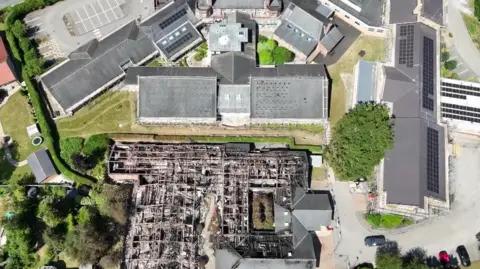
Last week, fire investigators said a blaze on the site of Malton, Norton & District Hospital in North Yorkshire "most likely" started at one of the building's rooftop solar panels.
A fire in Suffolk led to panels being disconnected at about 80 schools in June, while about 250 people were evacuated from an Ikea store in London after panels caught ablaze in October last year.
Pregnant women and babies were evacuated from a maternity ward in Bristol after a fire believed to have started in solar panels in May 2025.
Current fire incident reporting does not allow the government to determine how many fires have been directly caused by solar panels.
However, the number of incidents in England where "solar panel" or "photovoltaic (PV) panel" has been mentioned in the fire incident records doubled from 39 in 2020 to 81 in 2024.
The Building Safety Regulator said findings from such incidents were monitored "to capture all relevant safety learnings".
"As part of our ongoing review of building safety and fire standards, especially regarding modern construction methods and risks, we recently consulted on updated guidance for roofing systems and technology," a spokesperson said.
"We are now analysing those consultation responses while continuing to engage and collaborate with partners to identify appropriate mitigations for solar panel risks as required."
 BBC/Oli Constable
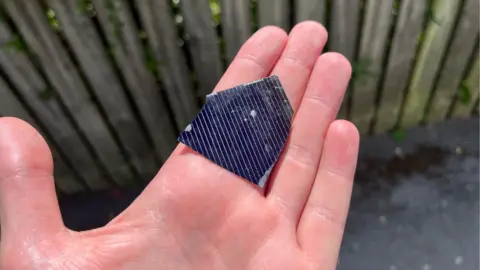
While a full report into the cause of the fire at the Springwood unit in Malton is expected in the coming weeks, the NHS trust which runs it said damage sustained to solar panels made it impossible to determine "any further details about the cause".
The Tees, Esk and Wear Valleys NHS Foundation Trust insisted fire safety measures were "robust" with regular safety checks carried out to electrical infrastructure and installations.
"We can also confirm that the fire safety systems at Springwood operated as they were supposed to when the fire started," a spokesperson said.
Solar panels are present on other buildings within the Malton hospital site, run by the York and Scarborough Teaching Hospitals NHS Trust, which has been contacted for a comment.
More than 1,000 panels are due to be installed at nearby Scarborough Hospital.
'Fit and forget'
The "biggest problem" associated with solar panel systems is that many are installed as "fit and forget", according to Dan Wilkins, from insurance company AXA UK.
"That's not how they should be, they should always be serviced and maintained."
Wilkins, who works with site engineers to produce solar panel-related policies in his role as property technical risk manager, said weather and animals could impact the performance of panels.
But he added that anybody who lives or works in a building with solar panels did not need to be worried, as long as "the system was designed, installed and being maintained by a suitably accredited and competent organisation".
"Solar energy is a good form of energy and we need to be enhancing this."
He encouraged anybody considering the installation of solar panels to consult their insurance provider and an accredited supplier.
He added: "The roof system may have passed its appropriate standard, but that was before you were attaching a solar panel to it and that supersedes that standard."
 BBC/Rob Smith
A report was commissioned by the government to examine risks to roofs from fires involving PV panels.
Published in February, it warned that "roof performance in a fire scenario" could be altered by their presence.
Panels can trap heat closer to the roof surface, it said, increasing temperatures and "potentially accelerating fire spread".
But fire spread "tends to cease after a relatively short distance" once it was no longer underneath PV panels.
Factors affecting the spread of flames in a fire involving solar panels included "panel elevation, inclination, mounting systems, wind, and spacing", it added, while also calling for further research and a "comprehensive approach".
It recommended that "focus should be placed on mitigating fire spread and roof penetration", by leaving gaps between arrays of PV panels and ensuring roof surfaces were not made of combustible materials.
Wilkins said that during fire incidents, PV panels posed an electrical risk to firefighters, because "you can't turn off the sun so it's still going to be collecting that power".
He spoke of a conversation with one firefighter who, following a review of local solar panel fires, said they were often caused by a mismatch of the PV panel itself and the wiring system.
"If they're not fully compatible, they become loose and that's where we get arcing and that's where we have potential for fires."
Sometimes, cables produced by the panel manufacturer were not used, he said, because an alternative was cheaper.
There is currently no accreditation scheme for providers of large-scale PV systems, like those on hospitals and schools.
Installers can sign up to the Microgeneration Certification Scheme (MCS) for systems below 50KW, typically homes and small businesses, although it is not mandatory.
However, Wilkins said he would encourage large commercial clients to use an MCS-approved company.
"They've had the training, they've had the experience and they're going to work to the appropriate standards," he said.
"In an ideal world, there would be an accreditation body for these larger systems."
A spokesperson for MCS said fires involving solar PV systems were rare.
"There are now over 2m MCS-certified solar PV installations across the UK, and although MCS doesn't directly collect data on fire-related incidents, there have been very few reports of incidents involving fires," they said.
"However, any fire involving a solar panel is one too many and needs to be taken seriously. The industry's focus is on understanding root causes and reducing the number of fire-related incidents to as close to zero as possible."
They said work was ongoing with other industry partners to make PV systems "as safe as possible".
Listen to highlights from North Yorkshire on BBC Sounds, catch up with the latest episode of Look North.