2,000 pigeons shot with rifles at railway stations

 Getty Images/Sandra Standbridge
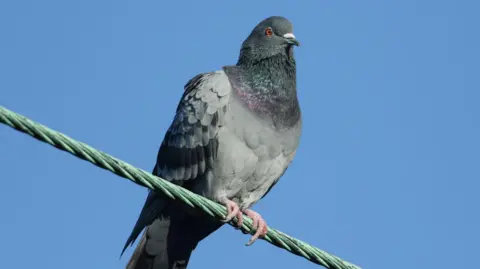
More than 2,000 pigeons have been shot at railway stations and depots across the UK in 16 months, the BBC has found.
Professionals with air rifles shoot the pigeons at night in an effort to prevent droppings becoming slip hazards or causing illness, but critics say the method is inhumane.
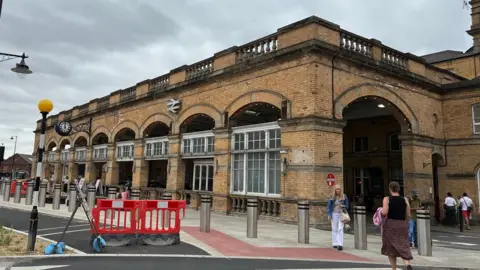
Of the stations managed by state-owned companies, York Station recorded 608 birds shot between January 2025 and April of this year - 152 of them on a single day.
The data was sourced under the Freedom of Information Act which does not apply to private companies, so it is possible other stations have culled more and the total is higher than the current figure of 2,019.
 Cathy Killick/BBC
LNER was the most prolific train operator with more than 800 birds shot at its stations in the year and four months to March 2026 - three-quarters of those at York Station.
"We do implement a number of deterrents and any other measures are as a last resort only," the operator said.
"The safety of our customers and colleagues is our number one priority."
It said its higher totals on individual days – 152 on 26 January last year, and 97 on 21 February this year – were a result of large gaps between cullings.
Network Rail had 600 pigeons killed across Bristol Temple Meads, London Euston and Edinburgh Waverley stations.
South Western Railway ordered the shooting of 250, Transport for London had 147, and Northern had 143.
Scotrail and c2c did not kill pigeons at any of their stations.
Rick Pellen from Pest UK said it was important to keep pigeon numbers controlled so they were not causing hazards, but the method of shooting was typically a "last resort".
"Pigeons faeces carry many diseases such as psittacosis and salmonella, and when you get a lot of pigeons concentrated on a property and you get a build-up, it can be a serious health hazard," he said.
"The last time I did a pigeon cull in a train station, I think I euthanised about 55 birds."
Rob Loft, of Yor-Pest Control, said he tended to "steer clear" of shooting the birds but "in tricky places, for public health, it's got to be done".
"I always feel sorry for something that's been shot," he added.
"I prefer to guide them away if possible, but expense is probably the problem, especially somewhere like York Station."
 Cathy killick/BBC
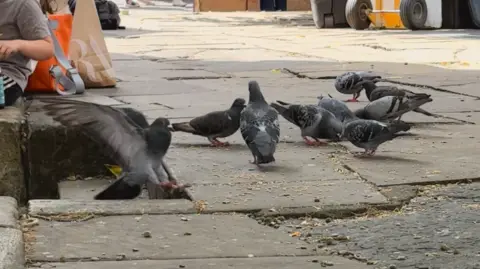
Loft and Pellen each said they felt the birds had to be classified as vermin due to the spread of disease.
Sue Joyce, director of the National Pigeon Advocacy Association, said: "In theory, humans are a pest, dogs are a pest, cats are a pest, because they all carry diseases that can affect humans."
She said the risks associated with their faeces gives pigeons "a bad rap", noting the birds themselves do not carry diseases.
Humans domesticated the birds and used them as messengers and as food for thousands of years.
They have only begun to be seen as pests relatively recently, after World War Two.
"What we've done is bred these animals, cast them aside and then given them the perfect environment...then we've given them these amazing tall buildings to perch in and to nest in," Joyce said.
"Pigeons are around us because we put them there."
She said some birds do not die instantly when shot and instead get startled in the dark and collide with things, but Pellen said that was "not true at all".
"You just have to shoot them in the head," he said.
He added that "good pest controllers always, always kill them in a humane manner".
A Network Rail spokesperson said it was "no secret" that many railway stations provided "attractive homes" to the birds.
They said a variety of deterrents, including spikes and vapour-releasing gel pods to discourage roosting, were used as a first port of call.
"A decision to cull pigeons is only taken as a last resort, where all other options have been exhausted," they added.
As of December, Northern had stopped carrying out culls at stations, and has more recently stopped at its depots too.
South Western Railway said it had not ordered any shootings since March 2026, and egg removal was carried out instead if possible.
All state-owned operators in the UK were sent the request for information in April except Govia Thameslink Railway, which had not yet gone into public ownership.
London Northwestern Railway and West Midlands Railway services were also only renationalised in February 2026.
Transport for Wales said it did not hold data for cullings, other than 41 pigeons were shot at its stations in the final months of 2025.
Transpennine Express and Southeastern have not responded to the request.
Listen to highlights from North Yorkshire on BBC Sounds, catch up with the latest episode of Look North