South Africa investigates death of Nigerian who collapsed during arrest

 Getty Images
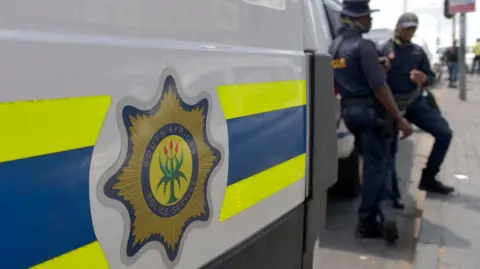
The South African authorities are investigating the death of a Nigerian man who collapsed while he was being arrested by police in Cape Town last week.
The initial results from a post-mortem showed that Ibeh Chika Simon, 42, "sustained multiple bruises and abrasions on his back and chest", according to the independent body that oversees police conduct.
Nigerian diplomat Ninikanwa Okey-Uche said her country was "deeply appalled by reports of the egregious police tactics that led to his death" on Thursday.
In its statement, Western Cape police said Simon died while he "was being placed under arrest [as] he allegedly became unwell and collapsed".
Simon's death comes amid heightened tensions between South Africa and Nigeria over allegations that Nigerians have been the target of xenophobic violence.
Earlier this month, the South African authorities confirmed the death of another Nigerian in June under similar circumstances.
In her statement condemning Simon's death, Okey-Uche, Nigeria's consul general in Johannesburg, called for a "transparent" investigation and alleged that there was "an alarming pattern of unresolved extrajudicial killings/deaths and unacceptable misconduct against foreign nationals".
"Suspects are entitled to due process in a court of law; no authority should be above it".
She also said there were reports that another Nigerian, Egwabor Patrick Chuks, was shot during same the operation and was in hospital with serious injuries. The Western Cape police said there was "no record of the incident".
Describing the circumstances of Simon's death, Western Cape police spokesperson Col Andre Traut, said that officers were conducting a search at a home in the area when they found an unlicensed firearm and what appeared to be drugs.
As they moved to arrest Simon, he "collapsed". Paramedics were called to the scene and he was "declared deceased at the scene".
Speaking to the BBC on Monday, Nigeria's foreign ministry spokesperson Kimiebi Imomotimi Ebienfa described the incident as "a very unfortunate situation".
The Independent Police Investigative Directorate (Ipid) is now looking into what happened.
South Africa's Inter-Ministerial Committee on Migration, during its regular public update on the country's approach to migration management on Sunday, also confirmed that the matter was being investigated.
Justice Minister Mmamoloko Kubayi, who chairs the committee, said that during the police operation in Cape Town last Thursday "some foreign nationals... were resisting law enforcement operations".
In June, Nigeria's foreign ministry reported the death of Emeka Charles Iroegbu, also allegedly at the hands of South Africa's police. Ipid is also investigating that incident.
Diplomatic tensions have also grown between South Africa and Ghana following claims that a Ghanaian man was killed during anti-migrant protests in South Africa, allegations South African officials have rejected.
Ghana was the first African country to repatriate citizens from South Africa at the start of the recent wave of anti-migrant protests.
Two Ghanaian nationals have also petitioned the International Criminal Court (ICC) to investigate alleged attacks against migrants in South Africa. The petition alleges there has been a "pattern of widespread and systematic attacks" against foreigners, arguing the violence could amount to crimes against humanity.
The South African government has rejected the petition as "opportunistic", saying it does not meet the ICC's legal threshold and that its own courts are capable of addressing such cases. The ICC has not said whether it will consider the request.
Last week, leaders of the West African regional bloc Ecowas condemned reported attacks on African migrants in South Africa, as Nigeria and Ghana raised the issue at a summit in Sierra Leone. They called on South African authorities to act quickly to protect foreign nationals.
South Africa has said it "categorically reject[s] xenophobia, racism, homophobia, and intolerance and discrimination in all their manifestations". President Cyril Ramaphosa has acknowledged concerns over migration but has urged citizens not to take the law into their own hands.

Go to BBCAfrica.com for more news from the African continent.
Follow us on Twitter @BBCAfrica, on Facebook at BBC Africa or on Instagram at bbcafrica